
A deliberately ignited fire, temperatures above 1,000 °C, dozens of measuring devices on the ground and in the air — and a timber structure exposed to it all. Not a stunt. A scientific experiment. The full video documenting the entire process is available at the end of this article.
Either Have Data - or Guess.
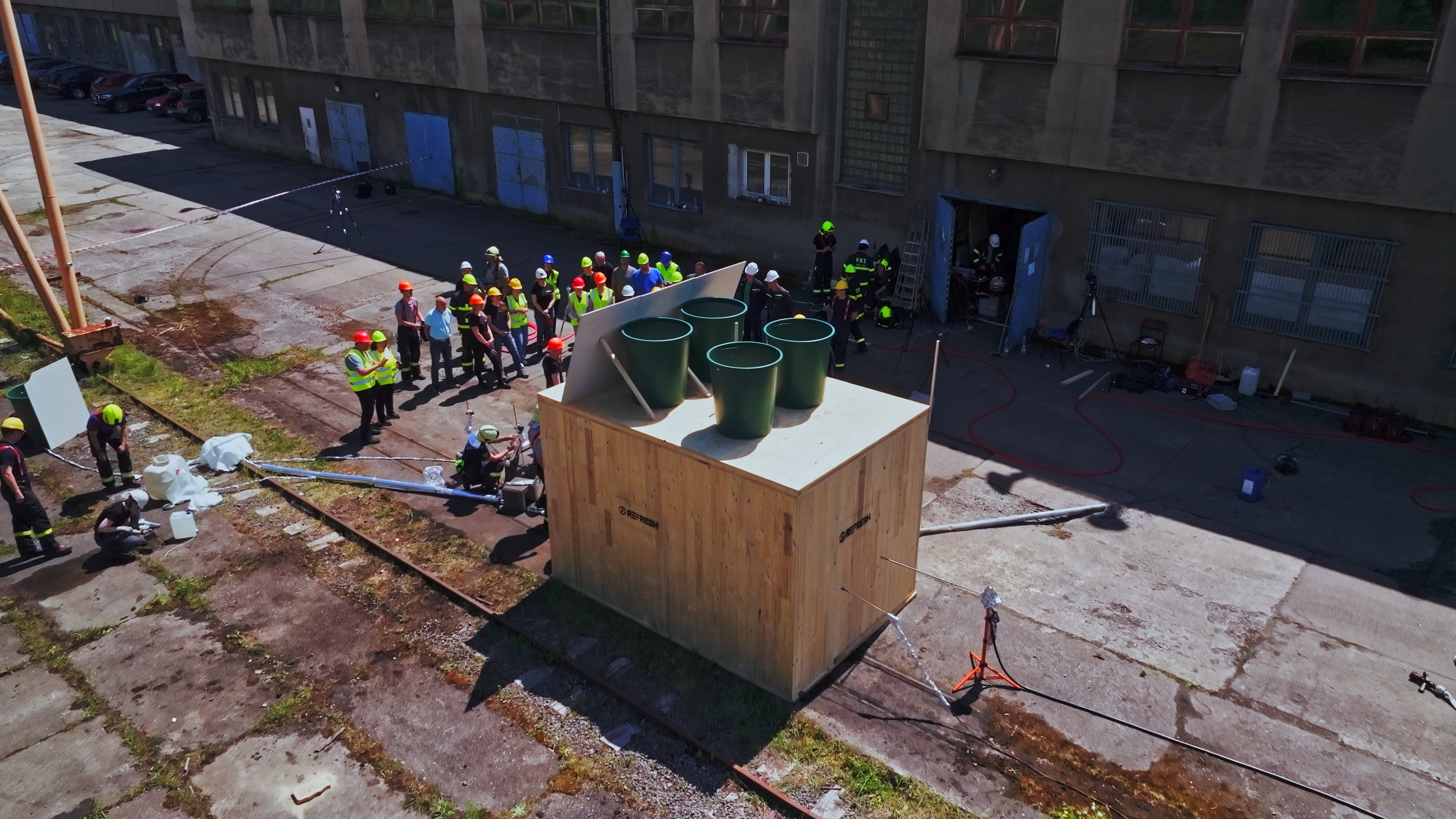
That single sentence sums up the philosophy behind our CLT fire experiment. Together with VŠB – Technical University of Ostrava, Faculty of Safety Engineering, we travelled to a former coal mine in Chlebovice near Frýdek-Místek, where we exposed a real timber structure to a real fire. The goal was never to create a dramatic show. It was to gather hard data that would help us better understand how mass timber buildings perform under extreme conditions.
Why We Tested CLT Panels in Fire.
Cross-laminated timber (CLT) construction is one of the fastest-growing segments in modern architecture and sustainable building. But with growing popularity comes growing scrutiny — particularly around fire safety. Theoretical models and engineering calculations provide a solid foundation, but without real-world validation, they remain incomplete. That's exactly why we designed this experiment: to generate results that go beyond assumptions.
How the Experiment Was Conducted.
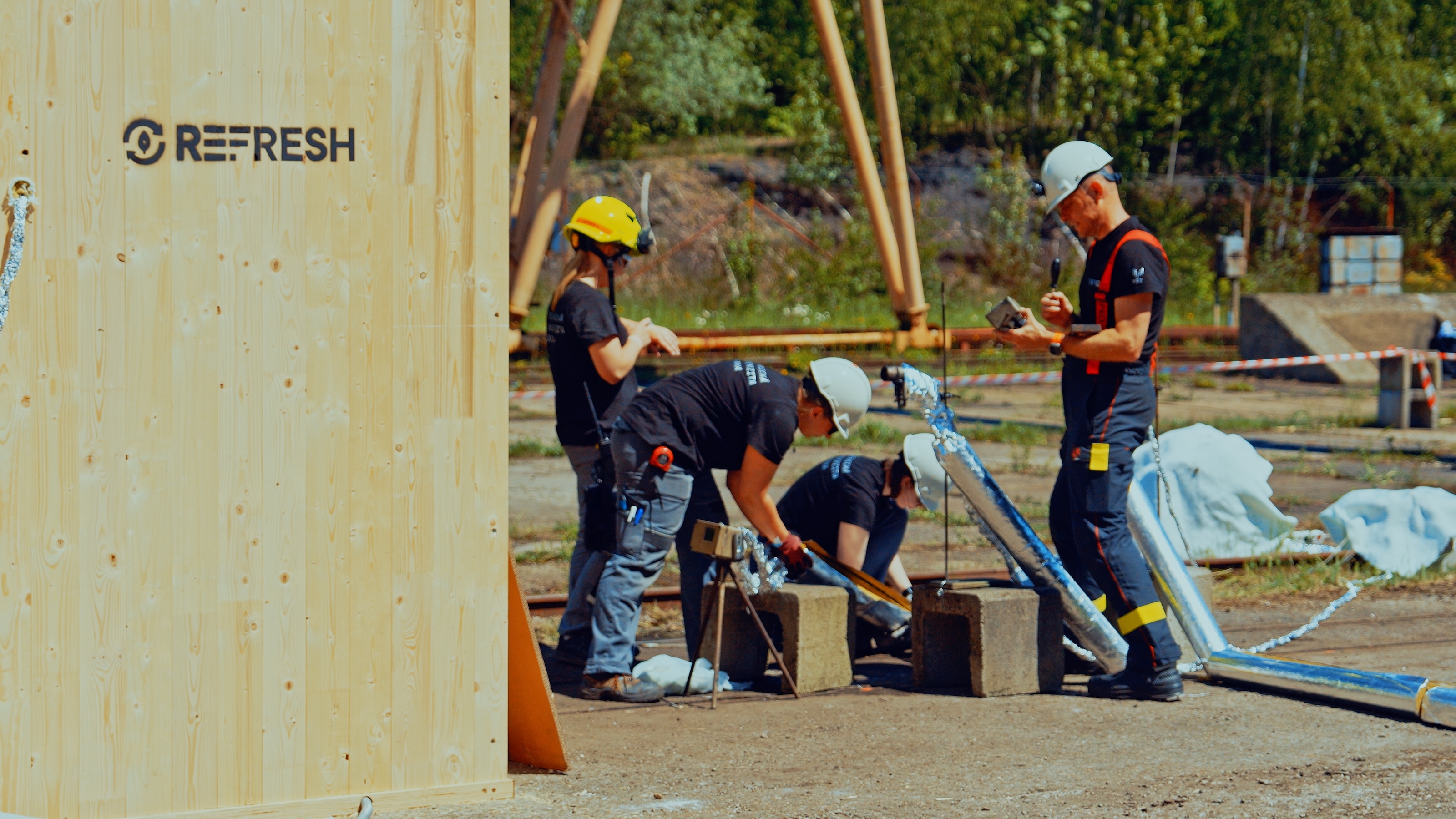
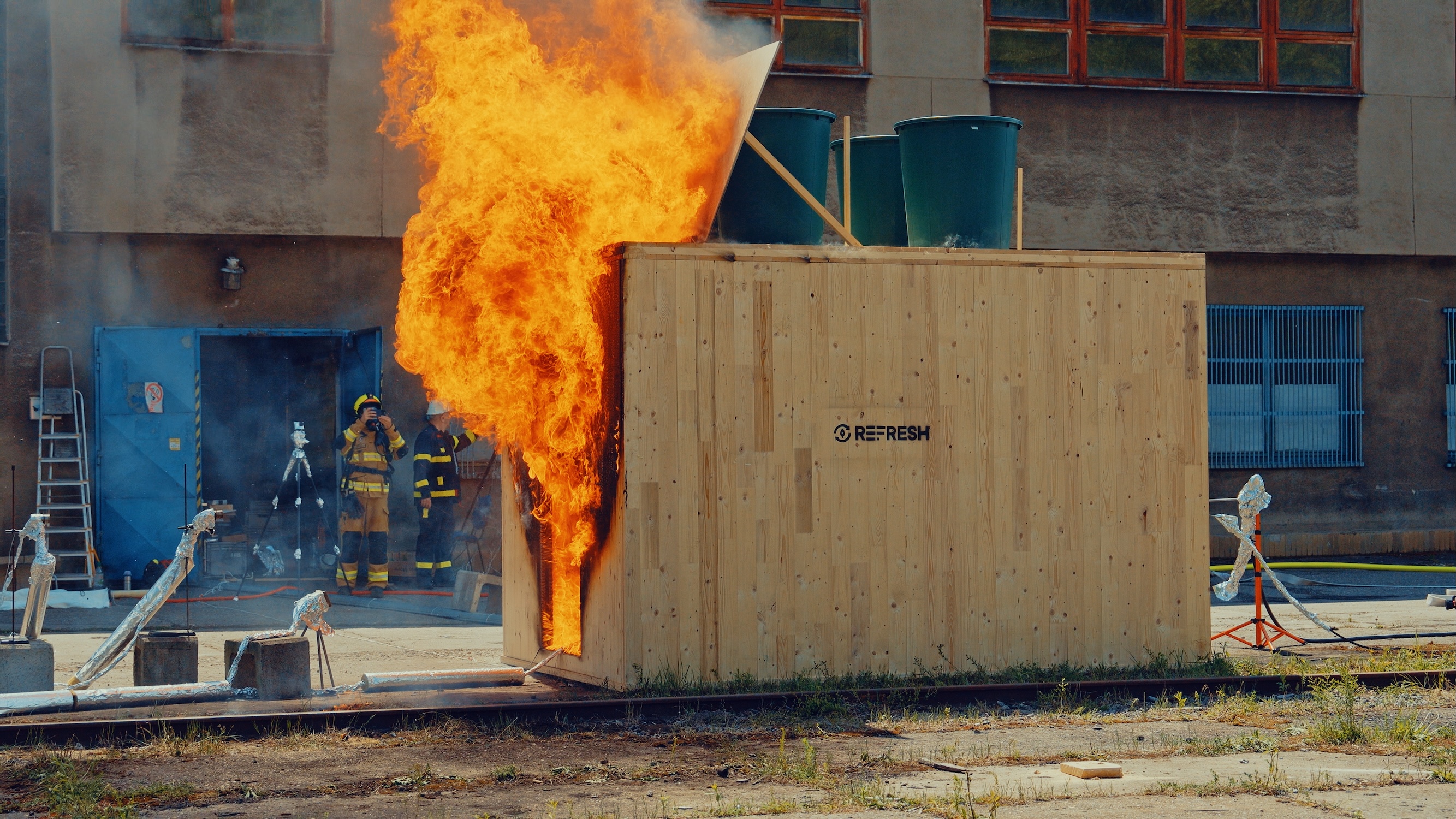
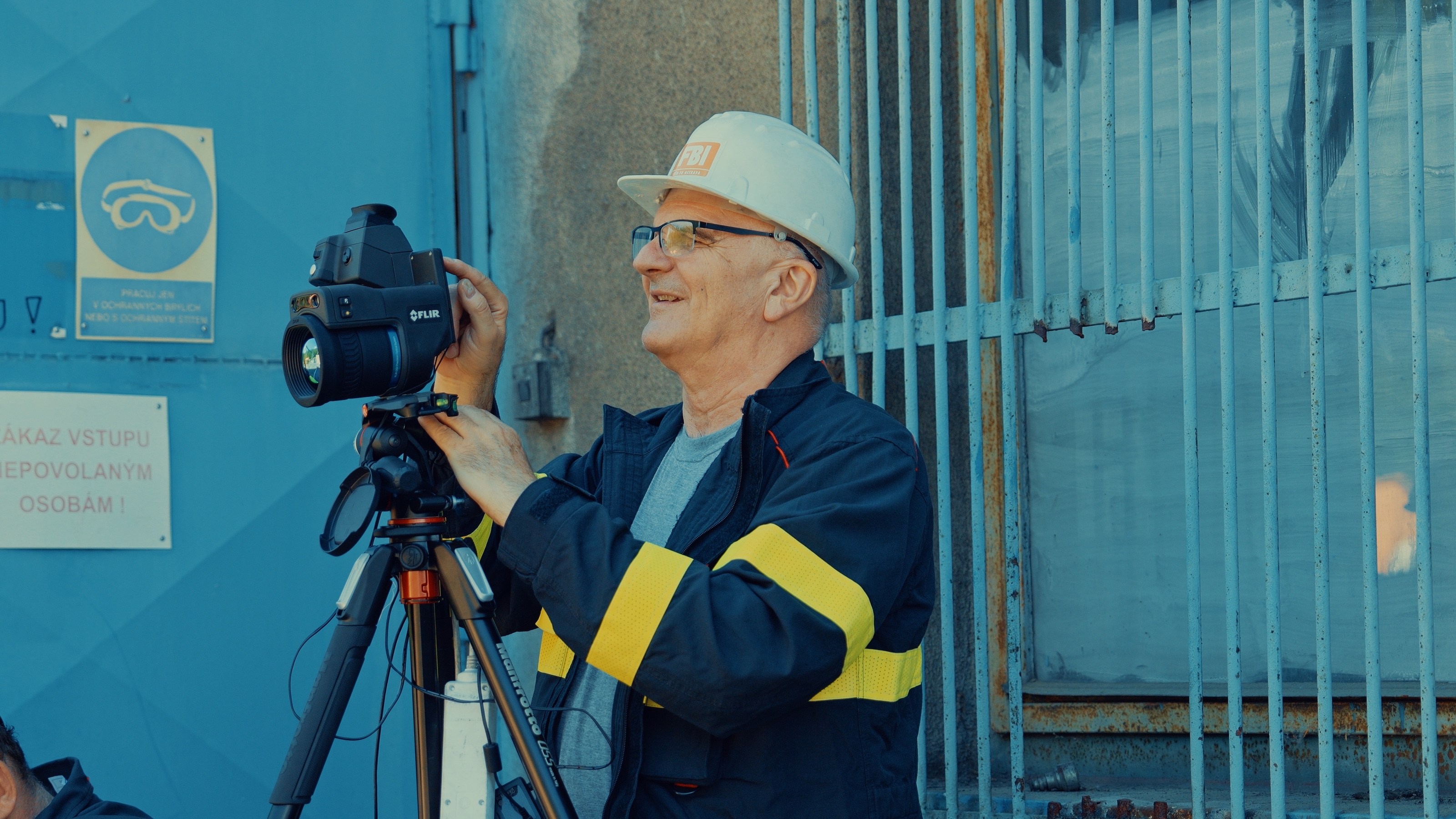
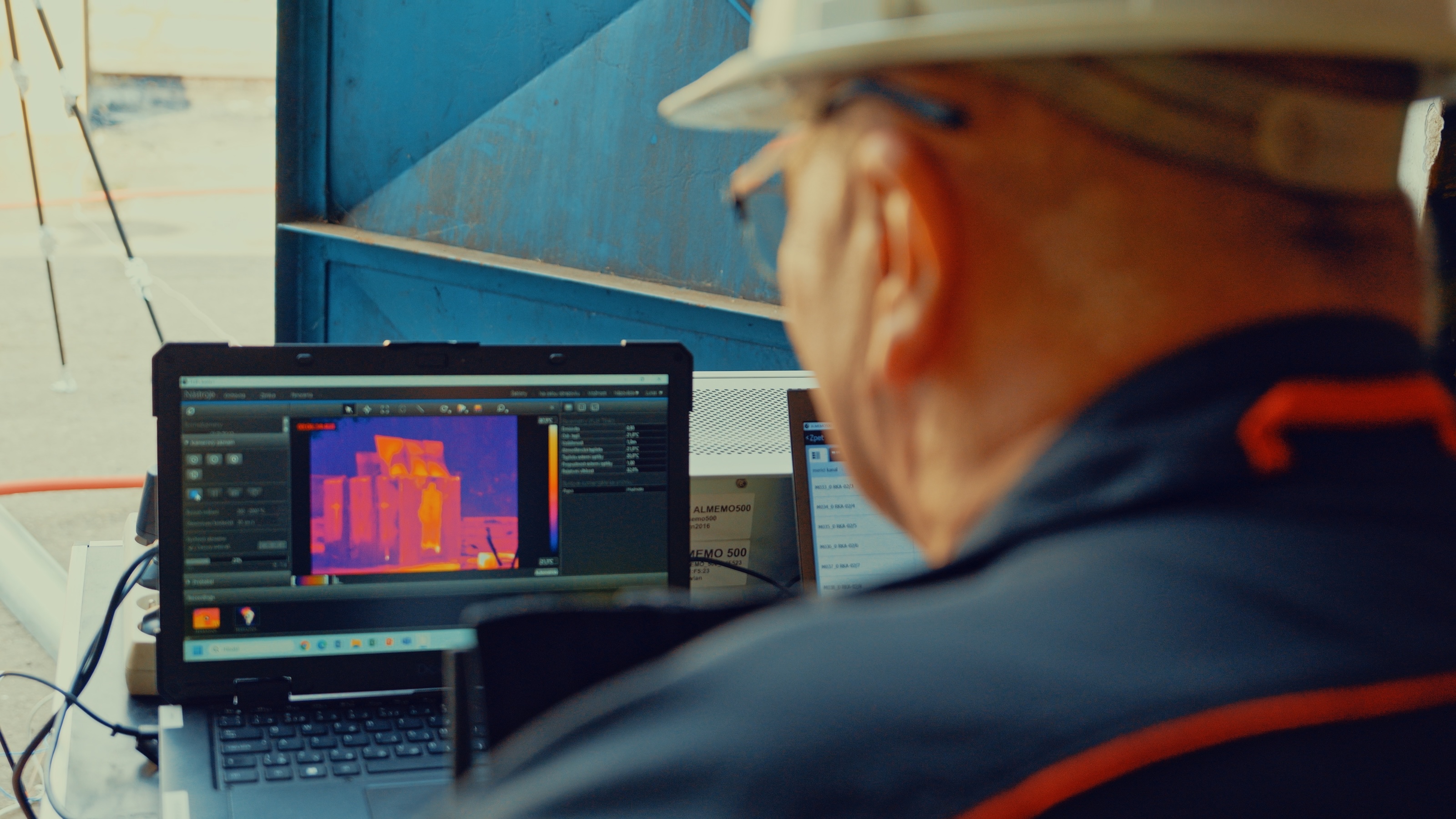
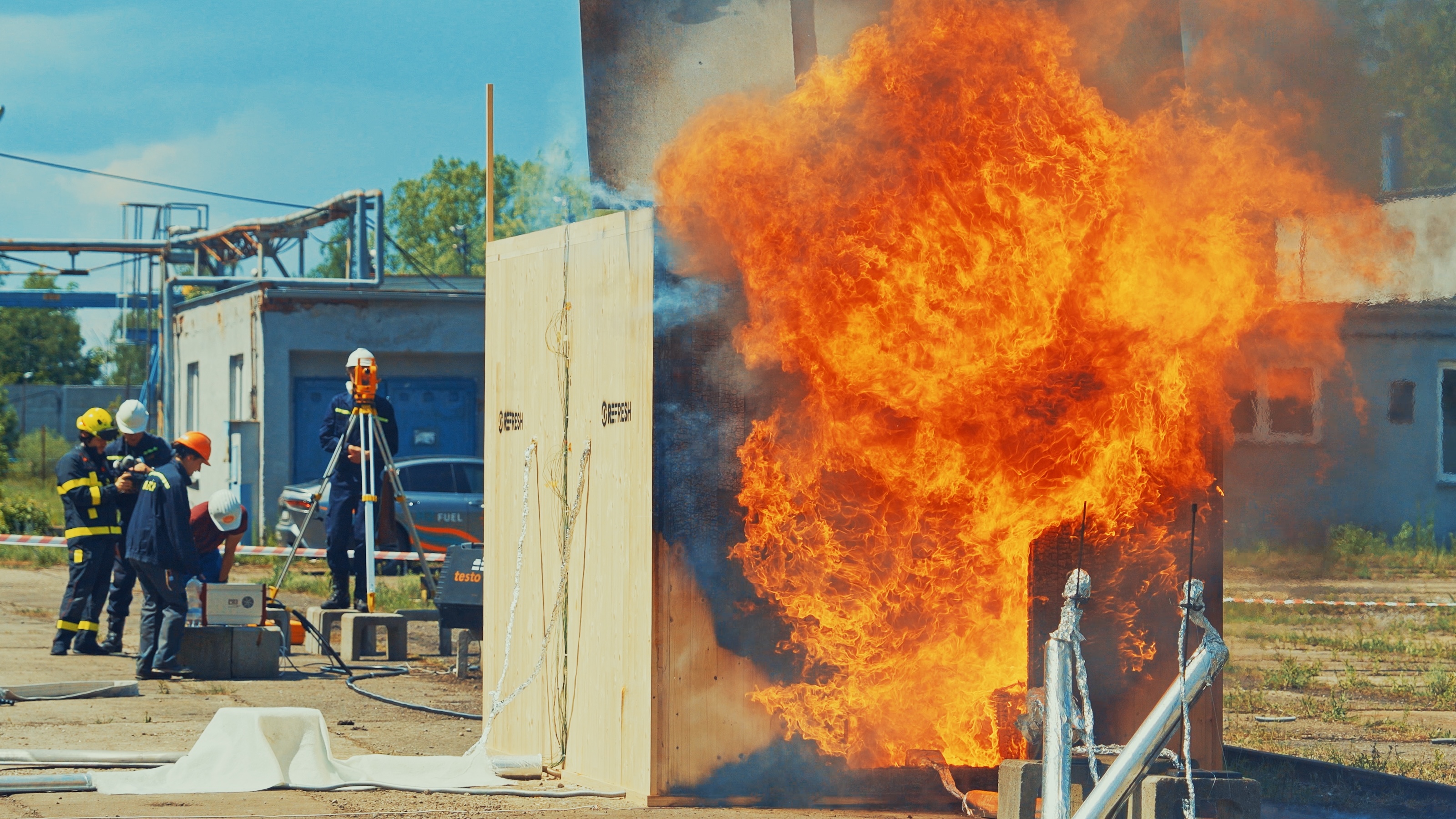
The test module was built from solid CLT panels — walls 80 mm thick and a ceiling 100 mm thick. The structure was exposed to fire load for 30 minutes, a timeframe that reflects the critical window for occupant evacuation and firefighter response. Throughout the experiment, ground-based and aerial sensors and thermal cameras monitored not only the internal temperature, but also heat transfer through the structural elements and surface temperature distribution on the exterior. The measurements revealed extreme conditions. "The temperatures recorded inside the room reached nearly 1,100 °C,"says Professor Aleš Dudáček of the Faculty of Safety Engineering — providing an exceptionally valuable baseline for further structural analysis.

What the Data Revealed.
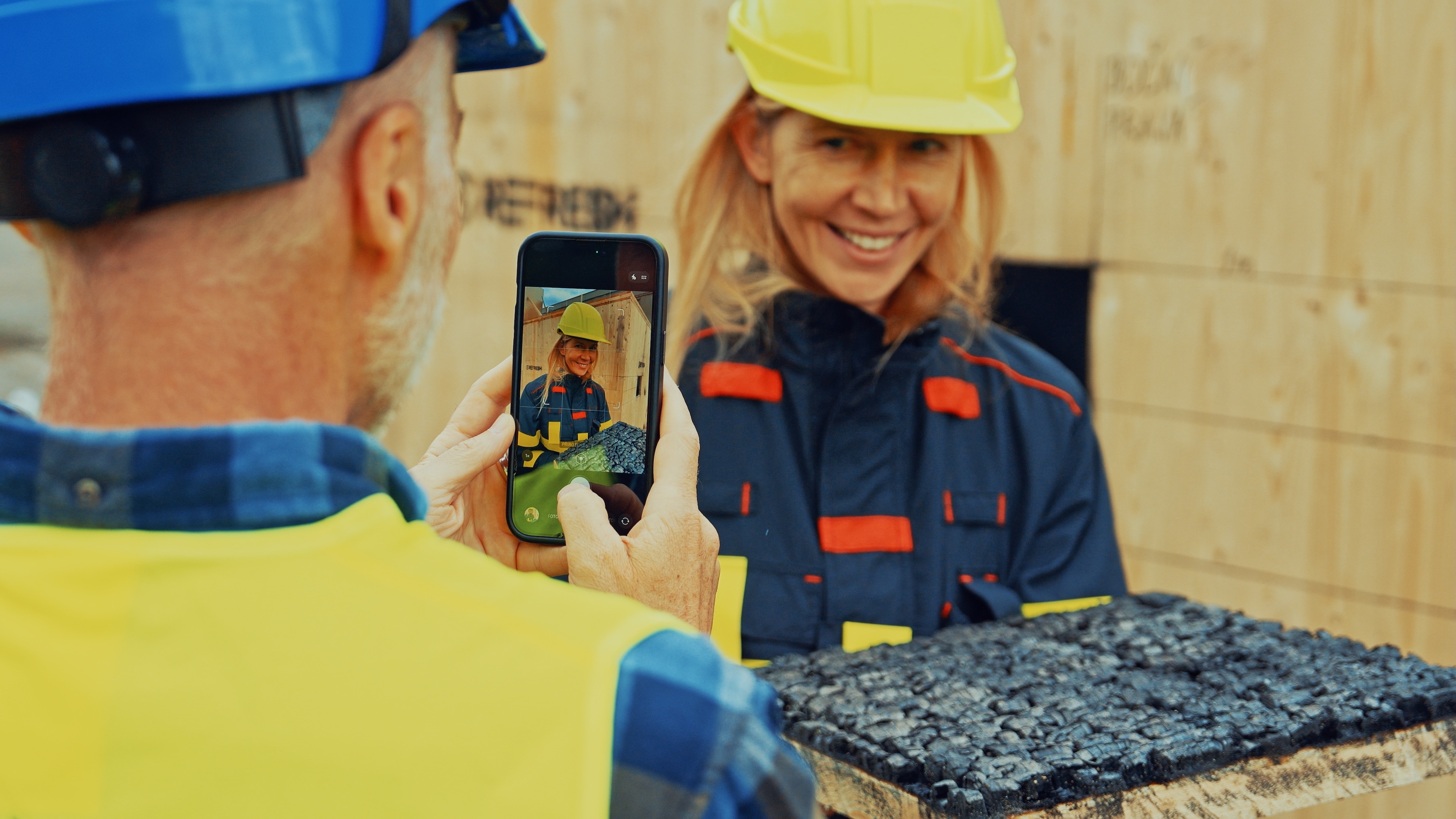
The experiment confirmed that CLT structures exhibit relatively predictable behaviour even under high fire loads. Notably, different parts of the structure responded to fire differently. While the walls charred to approximately two-thirds of their thickness, the ceiling retained a significant portion of its original mass — and therefore its structural load-bearing capacity. The collected data is now being analysed in detail by experts at the Faculty of Safety Engineering, VŠB – Technical University of Ostrava. Full results will be available within the coming months, offering an even deeper understanding of structural behaviour under fire conditions.

Bridging Science, Practice and Education.
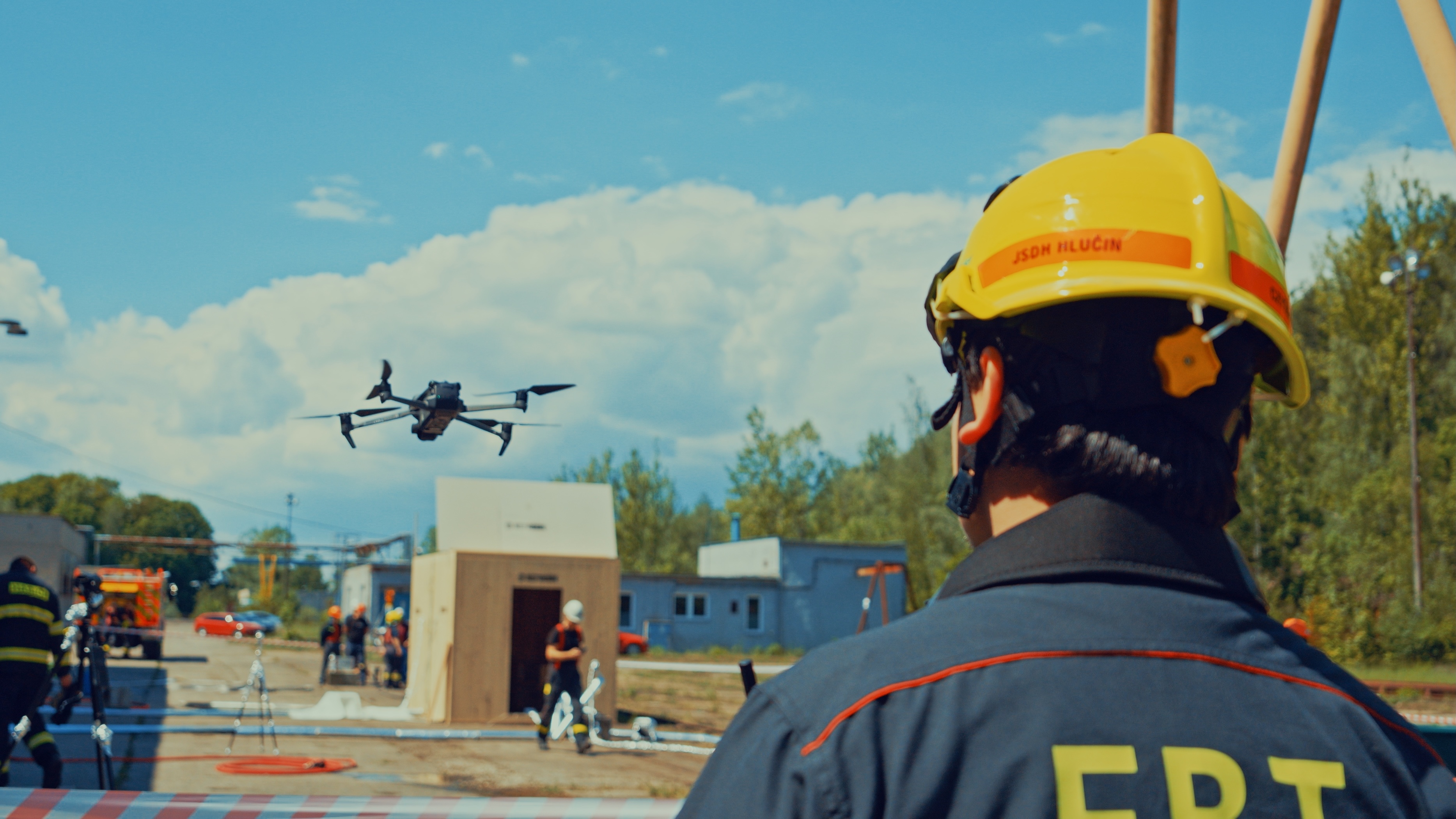
One of the greatest strengths of this experiment was the collaboration between academia and the construction industry. "We could never have collected this data on our own, let alone analysed it theoretically — but we can contribute real-world construction expertise," says Michal Šopík of Vesper Homes. This partnership is what makes the data both rigorous and practically applicable, with a direct impact on how buildings are designed and built. The experiment also involved students who witnessed the entire process in a live environment — an irreplaceable hands-on experience that helps shape the next generation of construction and fire safety professionals.

Timber and Fire Safety: A More Nuanced Picture.
Timber is often perceived as a high fire-risk material. The reality is far more complex. Solid wood elements such as CLT panels form a charred surface layer when exposed to fire — and that char actually slows further combustion, protecting the structural core beneath. "We've always known that wood burns. But through experiments like this one, we're gaining enormous amounts of data and new knowledge that allow us to push our buildings in an even better and safer direction," says Tereza Sigmundová, Project Manager at Vesper Homes.
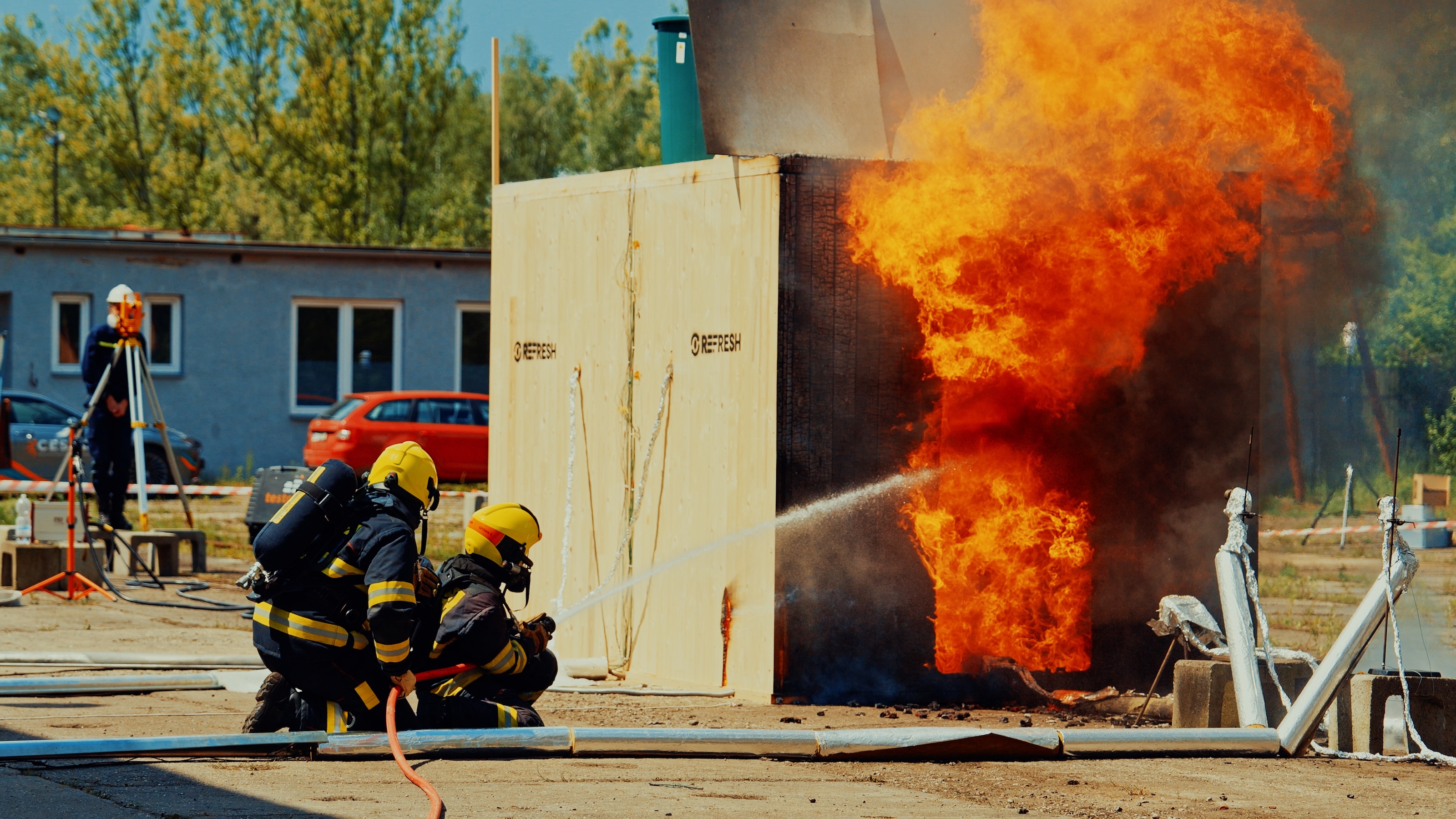
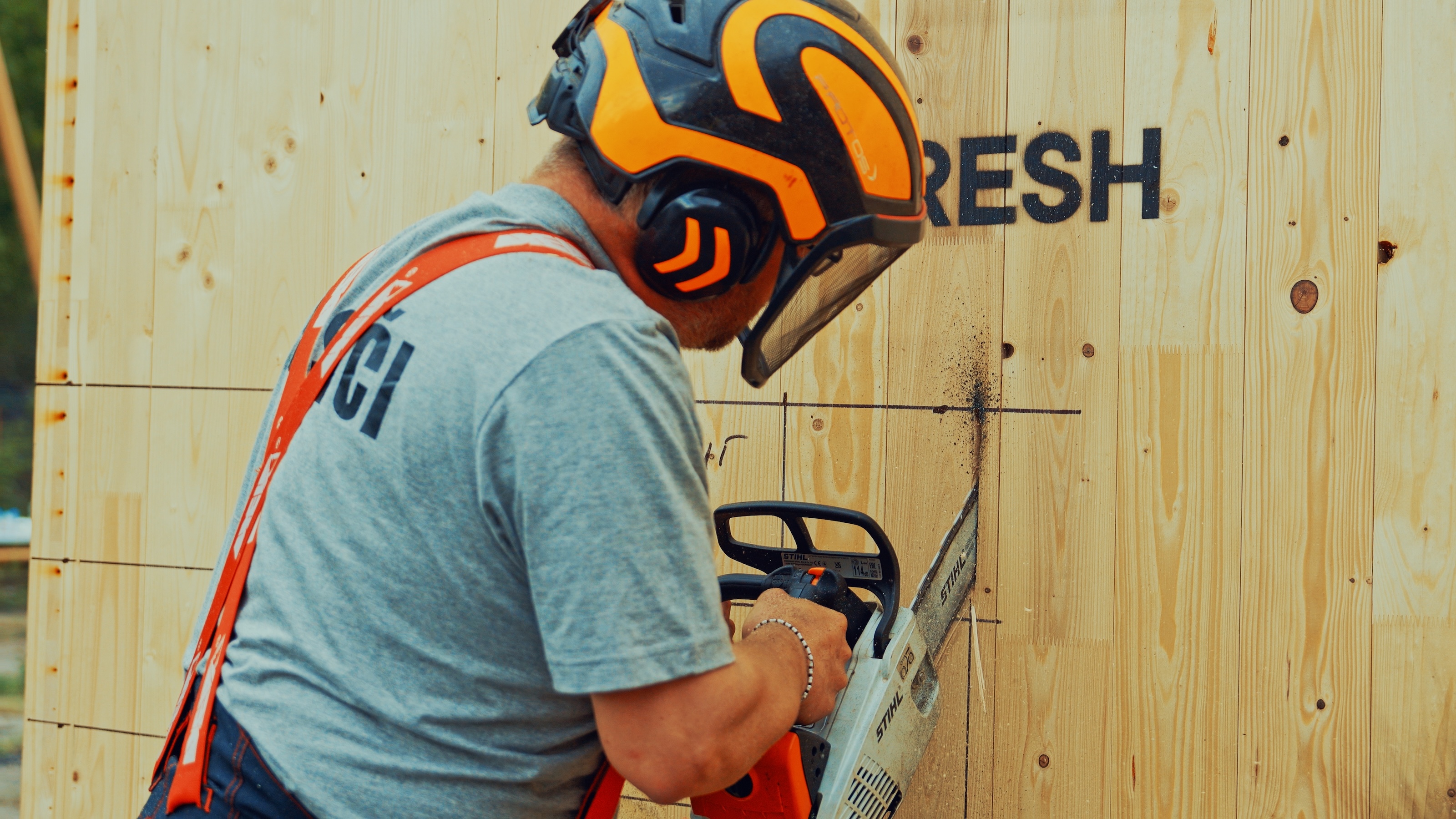
That said, the structure itself is never the only factor in fire safety. All timber buildings require systematic attention to fire prevention — and that responsibility must be taken seriously. Building with wood makes sense, but only when appropriate preventive measures are integrated into the design from the outset.
"Let's build with timber — but let's implement the right preventive measures: automatic fire suppression systems, detection systems, and other elements that help minimise risk and enhance the overall safety of the building," adds Vice-Rector Jiří Pokorný of VŠB – Technical University of Ostrava.
Who Benefits from This Data.
The findings from this experiment extend far beyond a single project or company. The data will be put to use by: Architects and structural designers developing safe mass timber buildings, structural engineers and fire safety specialists when sizing and specifying fire-resistant assemblies, developers and investors making informed decisions about timber construction systems, government bodies and standards organisations — the data will directly inform the development and refinement of building codes and fire safety regulations. Emergency services, particularly fire and rescue services, gaining a better understanding of how timber structures behave during an incident. Academic researchers and students as a real-world foundation for further study and teaching.

The Future of Timber Construction Is Built on Data.
This experiment made one thing clear: real data is essential for the continued advancement of mass timber construction. It enables designers to push boundaries, improve safety, and support the broader adoption of wood as a sustainable building material. The insights gained here don't just matter for one project — they have industry-wide implications, shifting perceptions and providing arguments grounded in real results.
The experiment is best captured in one simple but powerful idea: "Fire is not the enemy — as long as you understand it." Through systematic testing, precise measurement, and expert collaboration, we can better understand how materials behave — and design buildings that are not only modern and sustainable, but above all, safe.